The Missing Storage Layer in the Neocloud Stack
Read More
Insights
Capacity. Performance. Longevity. Sustainability.

Enterprise-grade density without the cloud tax.

Up to 70% energy savings. Zero performance compromise.


AI Storage

Neocloud Storage

HPC & Research

Media & Entertainment

Enterprise File Services

Surveillance & Security

Active Archive & Backup
Leil is the foundation of cutting-edge deployments and national labs. In Partnership with:




Value Added Resellers & System Integrators, Technology Alliance Partners, Research Institutions, Affiliates
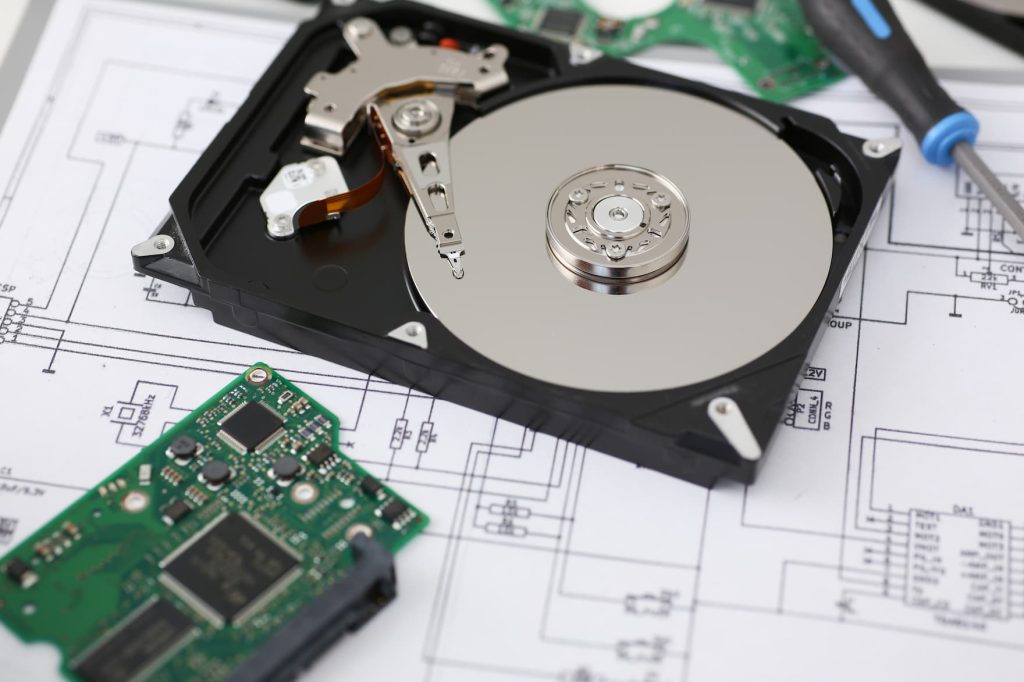
Explore partnershipsStandard software-defined storage systems treat hard drives as generic, abstracted devices—and lose 20–30% of potential performance and density as a result. Leil operates directly at the physical hardware layer. Leil’s HDD-Native™ architecture means it manages physical drive layouts, sequential write streams, zone awareness for SMR, and precise drive power states. This brings the highly optimized storage economics previously exclusive to cloud hyperscalers straight to enterprise on-premises environments.
When hardware supply lines are constrained, your immediate priority must be maximizing the infrastructure you already own. Leil delivers Extra Capacity: by fully supporting Host-Managed SMR media, Leil unlocks approximately +20% additional usable capacity per drive—the equivalent of +6TB free on a single high-capacity disk—compared to generic storage software. That means petabytes of hidden storage accessible with new hardware procurement. Alternatively, Leil makes it extremely easy to get started – whether you have a 2nd life hardware, mix of drives of various capacity, recording technologies, or generations – Leil works there just as smooth.
Large-scale AI workloads frequently suffer from tail latency spikes, where a single stalled drive can disrupt an entire training or processing run. Leil enforces SNIA Command Duration Limits (CDL), passing precise deadline hints directly to drive firmware. If a drive misses its execution window, Leil immediately reconstructs the requested data on-the-fly from parity. The result: deterministic, predictable I/O behaviour that eliminates tail-latency-driven disruptions to AI training and processing runs.
In traditional arrays, a single head or platter surface error condemns the entire drive to replacement—requiring removal, procurement of a replacement unit, and a full rebuild cycle. Leil implements Head Depopulation as part of Extra Longevity. When a localized failure occurs, Leil autonomously retires only the specific compromised platter surface. The drive remains online with zero downtime, continuing to operate at approximately 95% of its original capacity. The result: effective drive lifespan extension of up to +40%, transforming hardware from a depreciating liability into a long-term asset.
Significantly. Sustainability is Leil’s fourth operational pillar. The Infinite Cold Engine (ICE) integrates directly with SATA/SAS Power Pin 3 capabilities to physically disconnect electricity from idle drives—true zero-watt standby at the drive level, not merely spin-down. ICE manages power transitions at the filesystem layer, keeping up to 90% of drives powered down with fast wake-up when necessary. The result: storage-tier energy consumption reduced by up to 70%, with the added benefit of reduced thermal stress that further extends drive longevity.
Yes—and without touching a single application. Leil FS is a direct migration target for environments running Lustre, GPFS, BeeGFS, Ceph, or any POSIX-compliant distributed file system. Because Leil FS exposes native POSIX semantics and standard NFS, Samba, and S3 interfaces, every workload that runs today continues to run unchanged: no recompilation, no driver changes, no custom integration work. The migration path replaces the storage layer, not the application stack. On the infrastructure side, Leil FS packages are being integrated into major Linux distributions—Debian and Ubuntu first, with Fedora to follow—so deployment is a standard package install, not a bespoke engineering project. Teams that have spent months wrestling with Ceph’s operational complexity or Lustre’s hardware lock-in get a single, HDD-native parallel file system that is simpler to run, cheaper to scale, and open to the core.
Absolutely not. Leil maintains strict ecosystem neutrality and works across all major high-capacity HDD manufacturers, including Seagate, Western Digital, and Toshiba. The product stack comprises two layers: Leil FS, the open-source parallel file system (GPL-3.0 licensed), and Leil OS, the commercial enterprise distribution. Because the foundation is built on open-core standards, you have a guaranteed, permanent exit path. Your data always belongs completely to you, giving you full leverage to mix and match hardware vendors based on market availability and pricing.