The Missing Storage Layer in the Neocloud Stack
Read More
Insights
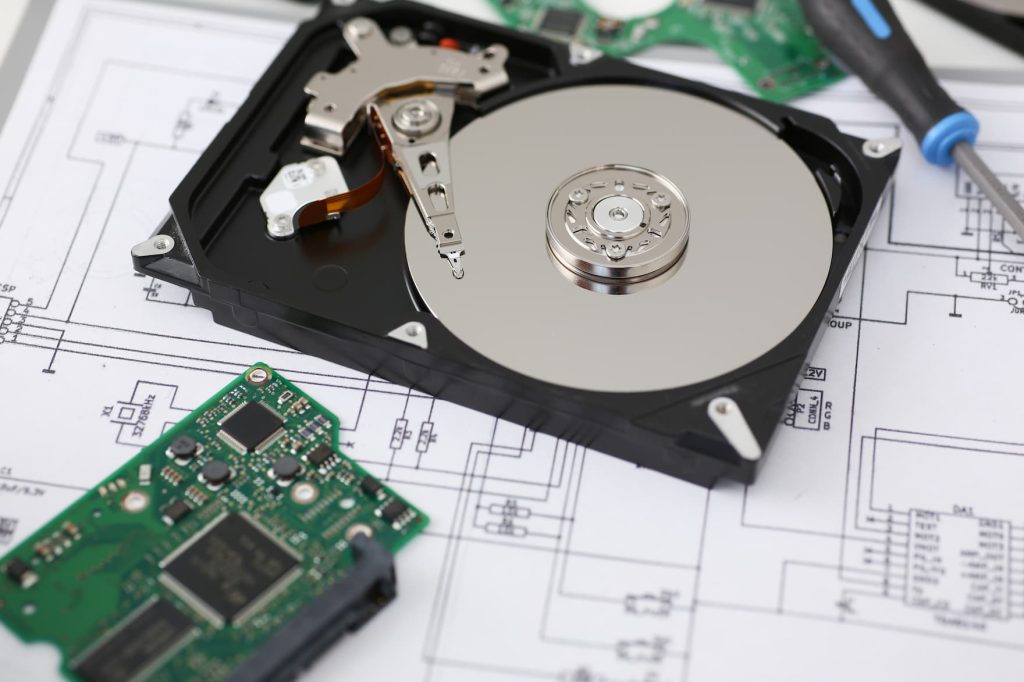
Over 80% of all world data is held on HDDs.
To unlock the true value of modern high-capacity drives, we must move beyond legacy abstractions to a hardware-aware architecture.
Every software defined storage declares being hardware agnostic, and thus performance agnostic. Only one is engineered from the physical layer up — starting with the modern HDDs and being truly HDD-Native™.

Unlock 20% density. Hyperscale efficiency now accessible.
Energy saving via intelligent power-disable
Moves the intelligence of error recovery from the disk firmware to the distributed file system layer
Self-healing drive lifecycle
Being HDD-native means the file system is engineered from the ground up for hard drive characteristics — write zone management for SMR, mechanical power-disable for energy savings, sequential optimization for rebuild speed. Storage platforms designed primarily for SSDs treat HDDs as an afterthought, losing 20-30% of potential performance and density. Leil’s HDD-native approach extracts full value from the physical storage layer.
Being HDD-native means the file system is engineered from the ground up for hard drive characteristics — write zone management for SMR, mechanical power-disable for energy savings, sequential optimization for rebuild speed. Storage platforms designed primarily for SSDs treat HDDs as an afterthought, losing 20-30% of potential performance and density. Leil’s HDD-native approach extracts full value from the physical storage layer.
Being HDD-native means the file system is engineered from the ground up for hard drive characteristics — write zone management for SMR, mechanical power-disable for energy savings, sequential optimization for rebuild speed. Storage platforms designed primarily for SSDs treat HDDs as an afterthought, losing 20-30% of potential performance and density. Leil’s HDD-native approach extracts full value from the physical storage layer.
Being HDD-native means the file system is engineered from the ground up for hard drive characteristics — write zone management for SMR, mechanical power-disable for energy savings, sequential optimization for rebuild speed. Storage platforms designed primarily for SSDs treat HDDs as an afterthought, losing 20-30% of potential performance and density. Leil’s HDD-native approach extracts full value from the physical storage layer.
Traditional SDS declares itself hardware-agnostic, which means it cannot optimize for specific drive physics. Leil is the only storage platform purpose-built for modern HDD characteristics – managing write zones, power states, and error recovery at the physical layer rather than through generic abstractions.
Yes. Leil OS delivers 95%+ write efficiency and 99% read efficiency on both CMR (Conventional Magnetic Recording) and SMR (Shingled Magnetic Recording) drives. CMR and SMR drives can coexist in the same cluster with seamless capacity refresh across drive generations and zero downtime.ent